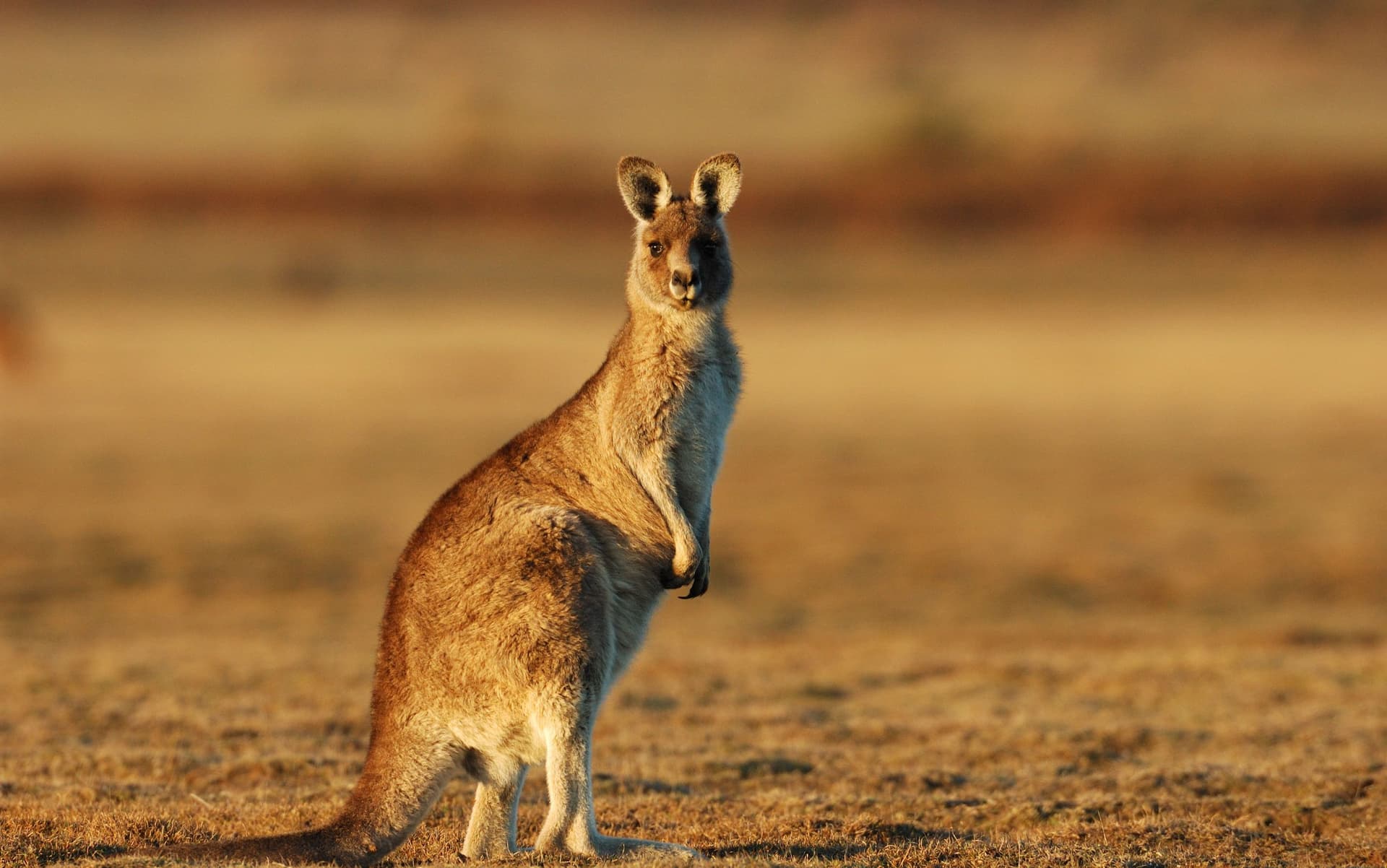
Kangaroos belong to the Macropodidae family, which are well-known marsupials native to Australia. They have strong hind legs, a distinctive hopping locomotion, and they play a vital role in maintaining grassland and woodland ecosystems. Largely herbivores, kangaroos play a crucial role in shaping vegetation patterns and supporting ecological balance.
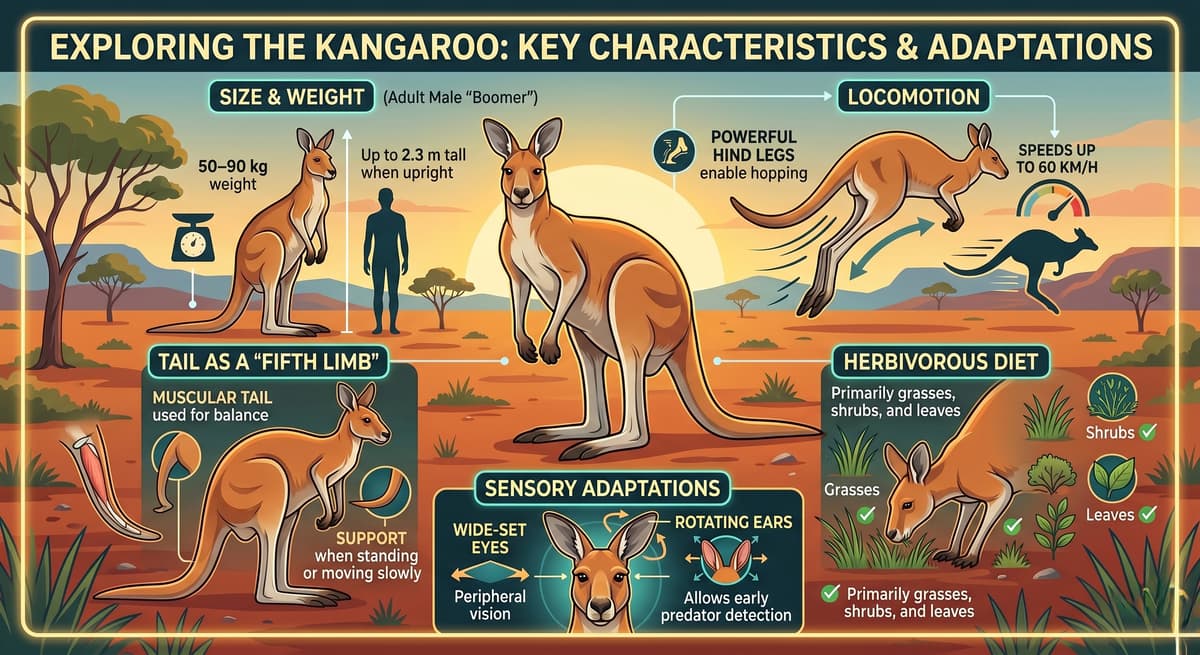
Size and Weight: Adult males (boomers): 50–90 kg, up to 2.3 m tall when upright
Locomotion: Powerful hind legs enable hopping speeds up to 60 km/h
Tail: Muscular tail used as a fifth limb for balance and support
Diet: Herbivorous, primarily grasses, shrubs, and leaves
Vision & Hearing: Wide-set eyes and rotating ears allow early predator detection
Key Insights into Kangaroo Behaviour and Ecology
Kangaroos are social animals. They live in groups known as mobs. It helps them feel safe because they are in large numbers. The size of the mob depends on food availability and environmental conditions.
Kangaroos have efficient digestive systems, so they can survive on low-nutrient grass. This enables the regulation of plant growth and balances the population as overgrazing is prevented.
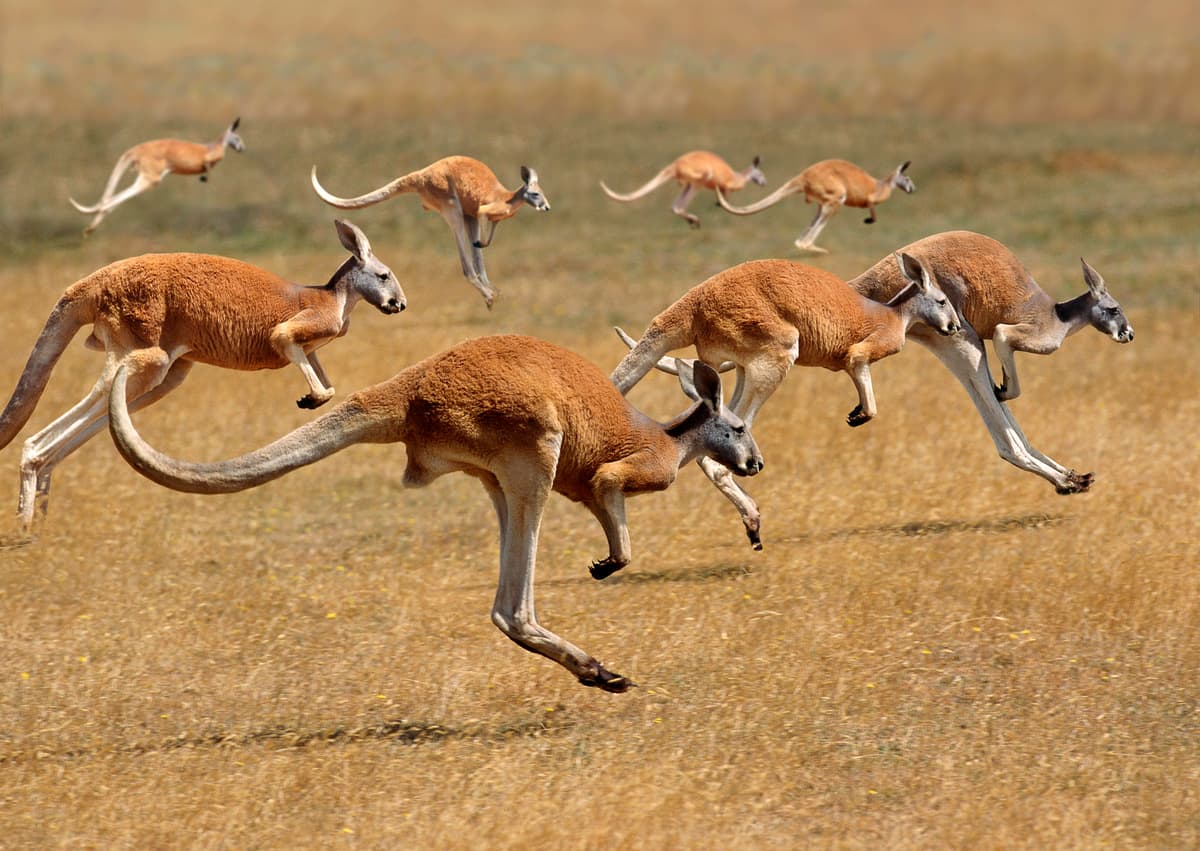
Kangaroos are unlike most mammals. They use both hind legs together, which leads to hopping. This is a highly energy-efficient method to cover long distances. For kangaroos, the faster they hop, the less energy they expend per meter.
Kangaroos are crepuscular, which means that they are most active during early mornings and late evenings. They avoid the heat of the day in order to conserve water and energy. One of the most fascinating reproductive systems in the animal kingdom is that of female kangaroos. Under harsh conditions, they can pause embryo development. This ensures that offspring born have a high survival chance. The little Joeys are underdeveloped at birth. Hence, they live inside their mothers' pouch for a few months. Here, they learn vital survival skills before they can survive independently. Kangaroos have a unique way of communicating danger. They use subtle body language, posture, and foot thumping to alert the mob.
Subspecies and Distribution
There are over 60 species of kangaroos and wallabies, with the most well-known being:
● Red Kangaroo
● Eastern Grey Kangaroo
● Western Grey Kangaroo
● Antilopine Kangaroo
They are found across Australia’s grasslands, savannas, woodlands, and semi-arid regions.
A Tribute to the Red Kangaroo: The King of the Outback
The Red Kangaroo is the largest marsupial in the world and a symbol of Australia’s open landscapes. Males are easy to recognise as they have reddish-brown coats and a muscular build. These creatures dominate large areas withstanding extreme heat conditions and water scarcity. They are able to endure this through physiological adaptations that decrease water loss and regulate their body temperature.
The presence of the red kangaroos hints at healthy functioning rangelands and showcases teh delicate balance between wildlife populations and habitat availability.
Spotting Kangaroos in the Wild
Best time to observe: Early morning or late afternoon
Common behaviours: Grazing, resting in shade, social grooming, mother-joey interactions
Safari and Wildlife Observation Tips for Kangaroos
● Maintain a safe distance and avoid sudden movements
● Never feed or approach wild kangaroos
● Observe quietly to witness natural behaviour
● Follow guidance from trained naturalists
At Junglore, wildlife experiences are designed to understand behaviour, not interrupt it. By combining expert-led curation with data-backed insights, we help travellers experience wildlife in an ethical, educational, and deeply respectful way of natural ecosystems.