BIG CATS TURNED DEADLY
Understanding Man-Eater Behavior.
BY DR. VAIBHAV M. CHAUDHARY
Note : Use of the term “Man-Eating” is by convention, as attacks are not limited to ‘men’ and do not always conclude with consumption.
“The world outside had its own rules, And those rules were not human.”
- Michel Houellebecq
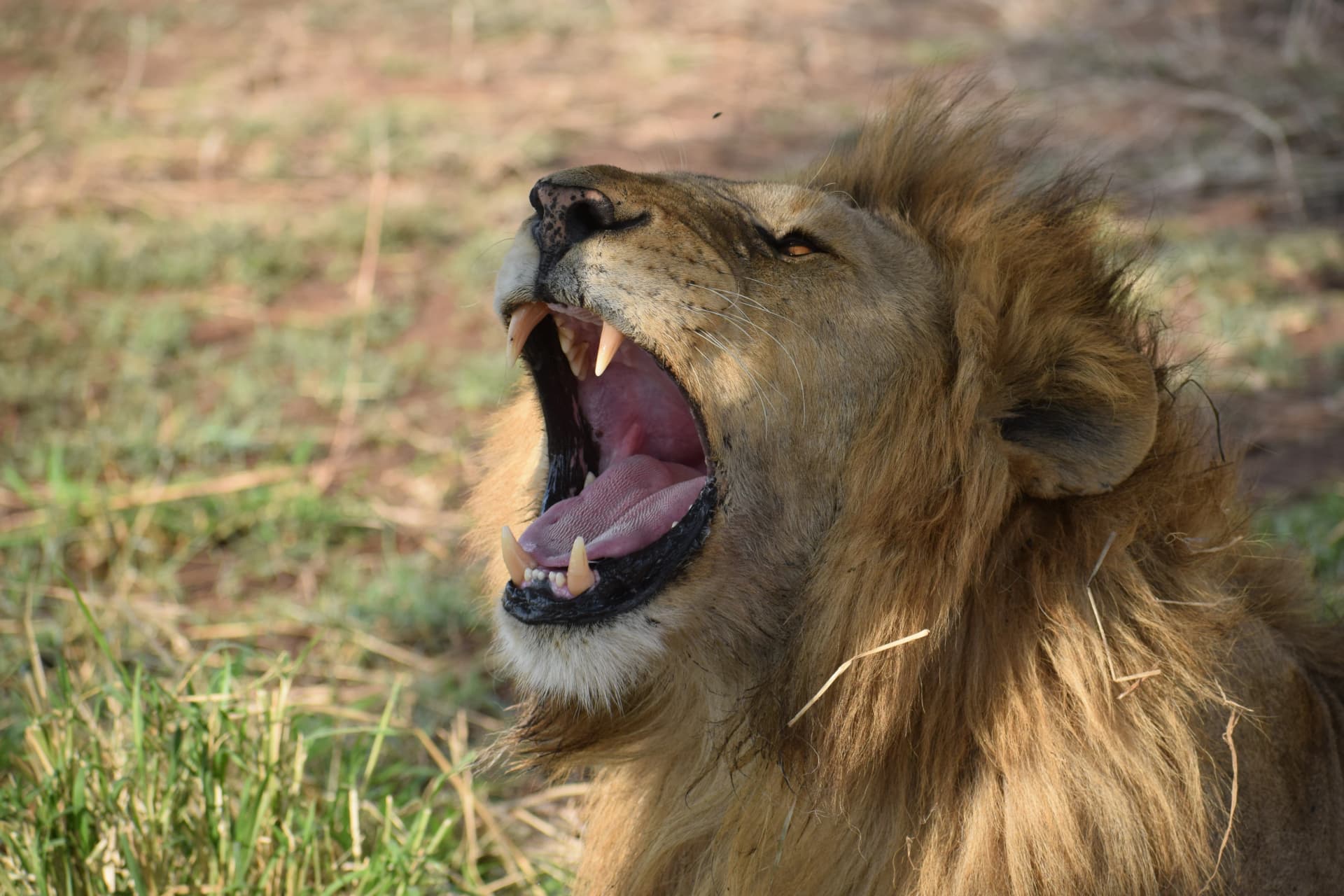
As humans, we are wired to compare, and when we consider the animal kingdom, we are often struck by the majesty of creatures that dwarf us in terms of size, speed, and strength. The Tiger being the epitome of such magnificence. There is no massive size difference between a tiger and a lion, but in general Tiger is heavier and stronger. Historical illustrations of big cat’s battles in the roman colosseum often portray the tiger emerging victorious.
Tigers are mostly solitary creatures with no friends and family in sight. Lions are unique in that they are the most social of wild fields living in groups called ‘Pride’ that sometimes contain 15 lions or in some rare cases super pride can contain up to 30 or more lions.
These apex predators do not generally target humans but when they do, they develop a preference for human flesh over their natural prey and eventually termed as “Man Eaters”.
The focus of this write-up is to investigate the transformation of big cats into man eaters, with a particular emphasis on the underlying causes.
TIGER
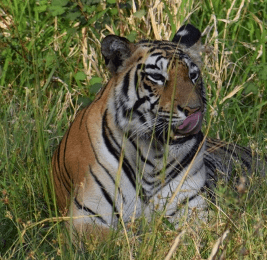
As a key component of the ecosystem, tigers help maintain the natural balance and harmony but when driven by extreme hunger or loss of their natural habitat due to human actions, they may be forced to venture into human dominated landscapes leading to conflicts.
A tiger on a fresh kill, or a wounded tiger, or a tigress with small cubs can be very reactive and kill human on creating any disturbance; but these tigers can not be called as ‘Man eaters’ though they are often so called.
There are notable man-eating tiger examples worldwide including Siberian Tiger (Russia) in 1990’s killed several people in the Russian Far East, Man eaters of Sundarbans include many tigers like The Sundarbans Man eater(1970s) A tigress responsible for killing over 20 people, The Dacope man eater(1980s), The Satkhira man eater tigress(2000s) are few famous names responsible for numerous human deaths in the Sundarbans mangrove forest of India and Bangladesh.
‘The Man-eaters of Kumaon’ is a book written by Jim Corbett, a British hunter and conservationist in 1944. The book is collection of stories about Corbett’s experiences hunting man eating big cats in the Kumaon region of India during early 20th century. Notable tigers include The Chowgarh Tigers (over 60 kills by two tigers), The Kanda Man eater, The Bachelor of Powalgarh, The Mohan man eater.
The most famous and having maximum kills in the world on its name is The Man Eater of Champawat this tigress killed over an estimated 436 people in Nepal and Kumaon region of India before being shot by Corbett in 1907.
If a single big cat can do that much damage, what happens when multiple
big cats work together? You are right! world’s biggest social carnivore is next on the list.
LION
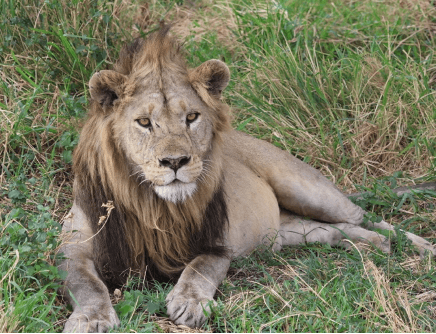
Many of you have probably heard of Man-eating lions of Tsavo (1898), two mane-less male lions in Kenya over the period of 9 months killed somewhere between 35- 135 people in the vicinity of construction site at Uganda railways. Those were two lions over a period of 9 months but what if a pride
of 15 lions turned to man eating and what if they were not stopped for more than 10 years. Yes! That’s the horrifying story of lions of Njombe. Estimated to have killed 1500 people in southern Tanzania during their rampages from 1932-1947. They were so feared that while locals knew about them, they
would not mention their name out of concern it would summon their spirits.
Among lions, specific prey preferences, including a focus on livestock or humans, can be passed down through generations, with the potential to become local social tradition. Historical records from Tsavo suggests that predation upon humans was a long-standing phenomenon. Humans were attacked and killed by lions in the Tsavo area well before constructions of the railway began and continued over 100 years after the infamous pair was dispatched (Kenya wild life service 1994-1998).
Lions develop a taste for humans after being provisioned with dead ones, this quality having striking similarity with that of another deadly predator bearing spotted coat and the most notorious one among big cat family, next on the roll.
LEOPARD
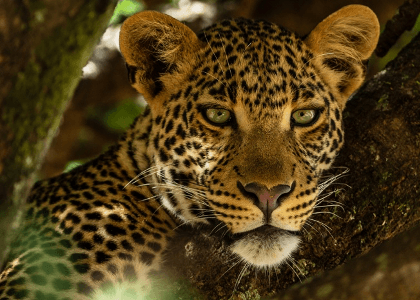
Leopards, being opportunistic feeders, may resort to scavenging and, in the absence of their natural prey, can develop a taste for human flesh, leading to man-eating behavior. Leopard attacks in history are well documented followed by epidemic waves in which people die faster than they can be
disposed of and a leopard in that area in which its natural food is depleted, finding these bodies very soon acquires taste of human flesh. Local burial practices can also encourage the development of man-eating behavior by providing easy access to human corpses.
In case of human being killed by carnivora, the doubt is often expressed as to whether the animal responsible for the kill is a tiger or leopard as they co occur in same natural habitat. Both are semi nocturnal forest dwellers, having same habits, apply similar methods of killings, but differs in the timings of attack due to difference in their courage level. When a tiger becomes a man- eater it loses all fear of human beings and result is mostly day time killings. On other hand, leopard never loses its fear of man even after several killings thus results in mostly night killings. A common thread emerged from my
conversations with jungle safari guides and assistants from Corbett National Park: leopards are considered more dangerous and difficult to control than tigers if they turn to man-eating.
Notable man eater leopard includes The Panar Leopard (1910) over 400 kills in Kumaon region India, The man eater of Rudra Prayag responsible for 126 killings in Uttarakhand India.
THREE ‘H’
Three ‘H’s plays a potential role in transforming a big cat into a man eater.
Human- Wild life conflict. Health of the predator. Habitat loss.
HUMAN- WILD LIFE CONFLICT
Human-Wild conflict occurs when the needs and behavior of wild life impact negatively on the goals of humans or when the goals of human negatively impact the needs of wild life. Basically, its contest between ‘Goals vs Needs’ with understanding of these two words itself help the reader to point
out the culprit.
If carnivores were innate man-eaters, human and wildlife coexistence to the present date would be a biological impossibility. Enormous disturbance done to the Predators, by the human’s mode of modernization which has taken every non-human as a secondary and an object to hunt.
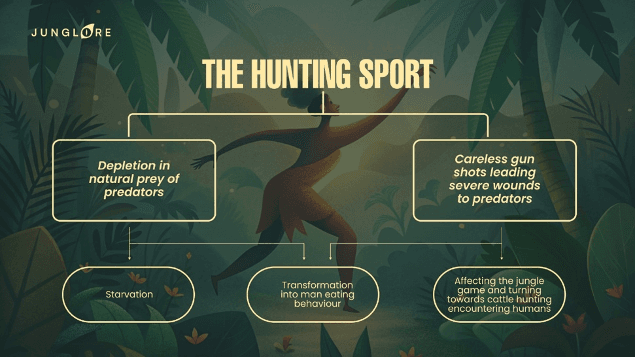
Hunting as game for humans has undoubtedly played a role of catalyst for a severe and unimaginable backlash from predators and can be summarized with a flowchart for better understanding.
HEALTH OF PREDATOR
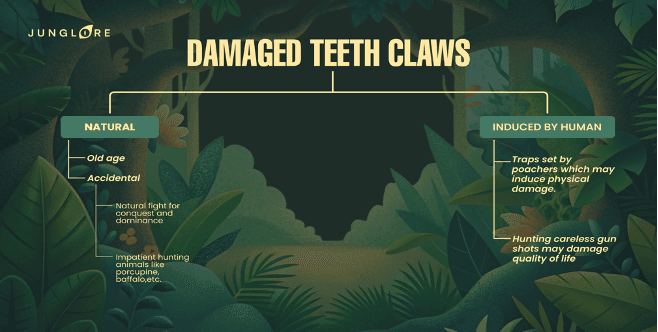
A predator’s hunting success relies on its speed, agility, stealth, sharp teeth and claws. However, when a predator is injured has damaged teeth or claws or otherwise unable to catch its natural prey, it may be targeting humans out of necessity.
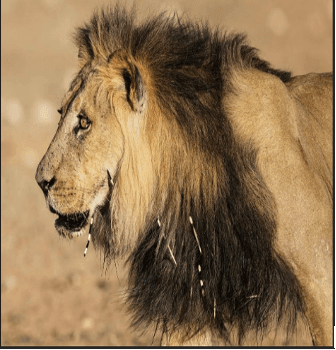
The classically recognized circumstances for man eating revolve around malnourished, aged, or wounded. Such animals are unable to pursue, or hold and suffocate, their normal prey. Damaged limbs, teeth, and embedded porcupine quills appear to be most common afflictions of some of the tigers, lions and leopards that transformed to man eater.
A lion with porcupine quills stuck in his face and neck, in South Africa's Kgalagadi Transfrontier Park. (Photograph by Tony Heald, Minden Pictures)
Of eight man-eating Tigers and two leopards gunned and penned down by Jim Corbett, severe physical anomalies were common to all; five of the individuals had at least one broken canine(tooth), three displayed severe porcupine quill damage, one had infected shotgun wound, and one was extremely old with worn-out and frayed claws.
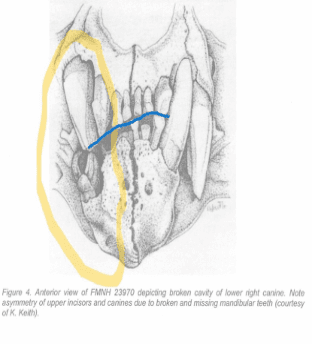
The first lion of Tsavo presented with broken canine with exposed pulp cavity (yellow marked area in the figure above) resulting in gradually eruption of upper teeth making them asymmetric and irregular in orientation (marked with blue line in the figure above) affecting in incising its natural prey. There are few exceptions to ‘injury and trauma’ theory as even bearing a severe injury The Pipal Pani tiger in Kumaon region of India didn’t turn man eater and was indulged in cattle killing. Another example is The Hardwar Tiger (UP forests of INDIA 1947).
HABITAT LOSS
Habitat loss is a significant threat to big cat population worldwide due to mainly
- Agricultural expansions.
- Deforestation.
- Urbanization.
- Infrastructure development.
Dense cover is required by ambush predators for stalking and killing the prey. Favoured areas are tall grasslands, woodlands, river edges with dense vegetation, and thickets. Excessive fast- track modernization of human race have camouflaged underlying natural factors responsible for habitat loss and defragmentation.
CONCLUSION
A perpetual tug-of-war exists between nature and culture, as each attempt to assert its dominance. Under the mask of cultural superiority human exert their control over nature, triggering the violent recoil from predators and ultimately undermining harmonious relationship that once existed between human and the natural world.
The African proverb “Until the lion learns how to write every story will glorify the hunter.” Highlights the idea that history and narrations are often manipulated to present culprits as victims.