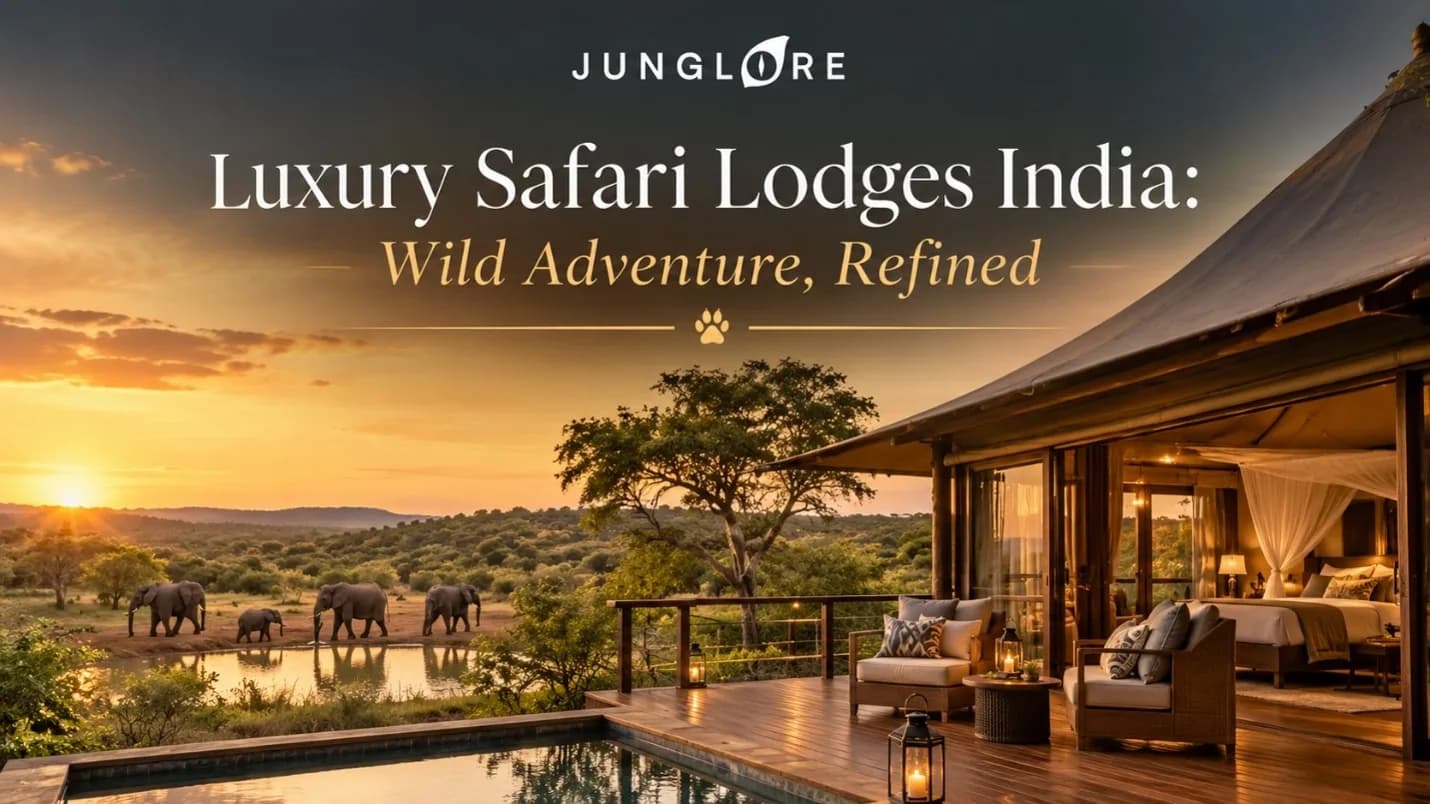
Luxury Safari Lodges India: Wild Adventure, Refined
There's a particular kind of quiet that settles over you on your first night in the forest no traffic, no notifications, just the distant alarm call of a sambar deer warning the herd that a tiger is somewhere close by. This is what pulls travelers deeper into India's wilderness year after year, and it's also why the properties built along the edges of these forests have had to raise their game considerably. Gone are the days of basic rest houses with a single bulb and a wobbly cot. Today's stays blend genuine comfort with real wilderness immersion, and the property you choose can completely change how the whole trip feels.
Why the Stay Matters as Much as the Park
Most first-time visitors spend all their planning energy deciding which national park to visit Ranthambore, Bandhavgarh, Kanha, Tadoba and that's a reasonable place to start, since each reserve has its own character and tiger density. But travelers who've done a few of these trips will tell you the property shapes the experience just as much as the park itself does. A well-run lodge means naturalists who can actually read pug marks and alarm calls, safari jeeps that don't break down mid-drive, and evenings spent around a bonfire instead of hunting for wifi signal in an empty lounge.
Refined luxury safari lodges in India have grown around exactly this idea that the in between moments matter too. Breakfast on a deck watching langurs move through the tree line, a sundowner overlooking a waterhole, a hot meal after a cold morning drive. These details add up to more than the three hours spent in a jeep.
What "Luxury" Actually Means Out Here
It's worth being clear-eyed here, since the word gets used loosely in travel marketing. A genuinely well-designed forest property usually gets a handful of things right:
Proximity to the core zone — being close to the reserve cuts travel time and improves sighting odds during drives.
Naturalist quality — guides who understand animal behavior and terrain, not just drivers who know the roads.
Architecture built around the landscape — cottages and tents made from local materials, facing the forest instead of away from it.
Low room counts — fewer guests generally means quieter grounds and calmer safari vehicles.
Genuine hospitality — regional food, personal attention, and staff who often grew up around these very forests.
None of this requires marble lobbies, though a few properties have those too. It's really about nailing the fundamentals of a wilderness stay while still sleeping comfortably at night.
Regions Worth Knowing Before You Book
India's reserves each carry a different rhythm. Ranthambore in Rajasthan pairs dramatic fort ruins and lake views with strong tiger sightings, which makes it a common pick for first-timers. Bandhavgarh in Madhya Pradesh has one of the highest tiger densities in the country packed into a fairly compact core zone. Kanha, also in Madhya Pradesh, is known for its sal forests and its role in bringing the barasingha back from near extinction. Tadoba in Maharashtra has grown fast in popularity thanks to its dry deciduous terrain and consistent sightings, while Kaziranga in Assam trades tigers for one-horned rhinos and open grasslands.
Each of these regions now has its own take on luxury safari lodges in India, though what counts as luxury shifts depending on where you are a boutique tented camp near Tadoba looks nothing like a heritage-style property outside Ranthambore.
Getting the Timing Right
Most central Indian parks run from October through June, closing during monsoon months when the forest tracks turn unsafe and animals scatter away from the shrinking waterholes. The strongest sighting window usually falls between March and May, when dry heat pushes wildlife toward remaining water sources though the temperatures can be brutal by midday. Winter (November to February) is milder and popular with families, even if sightings are somewhat less predictable during those months. Booking ahead of these peak windows matters, since well-located properties near core zones fill up months in advance, especially around long weekends.
Planning Without the Guesswork
For travelers who'd rather not stitch together park permits, safari timings, and lodge bookings on their own, working with a curated collection of vetted stays simplifies things considerably. Instead of researching each property from scratch, comparing locations, styles, and pricing side by side saves a lot of back-and-forth — particularly useful for anyone visiting India's forests for the first time and unsure which combination of park and property fits their travel style. Families often want more space and a pool nearby, while photographers usually care more about proximity to the core zone than anything else on the list.
A Few Honest Tips Before Booking
Ask directly how many safari drives are included, and whether jeep-sharing is involved it affects both cost and comfort.
Check the actual distance from the park gate; "near the reserve" can sometimes mean a 40-minute drive each way.
Confirm the cancellation policy on permits, since national park bookings are notoriously rigid and often non-refundable.
If sightings are your priority, ask for recent sighting data from the lodge's usual safari zones rather than relying on brochure language alone.
Frequently Asked Questions
What is the best time to book a safari stay in India?
March to May generally offers the strongest sighting odds due to dry conditions, while November to February is milder weather-wise and better suited to families or first-time visitors.
Which national park is best for a first safari trip?
Ranthambore and Bandhavgarh are commonly recommended for first-timers because of their relatively high tiger density and well-developed infrastructure around the parks.
Do these lodges guarantee tiger sightings?
No property can promise a sighting since wildlife movement is unpredictable. Lodges closer to the core zone with experienced naturalists generally offer better odds across a multi-day stay.
How many safari drives should be planned per trip?
Most experienced travelers suggest four to six drives across two to three days, since sightings tend to improve with repeated exposure to a zone's patterns.
Are these stays suitable for children or elderly travelers?
Many properties are family-friendly with flexible drive timings and ground-level cottages, though it's worth confirming accessibility and drive duration directly before booking.
Is booking safari permits in advance really necessary?
Yes. Core zone permits for popular parks like Ranthambore and Bandhavgarh sell out weeks or months ahead during peak season, so early booking is strongly advised